
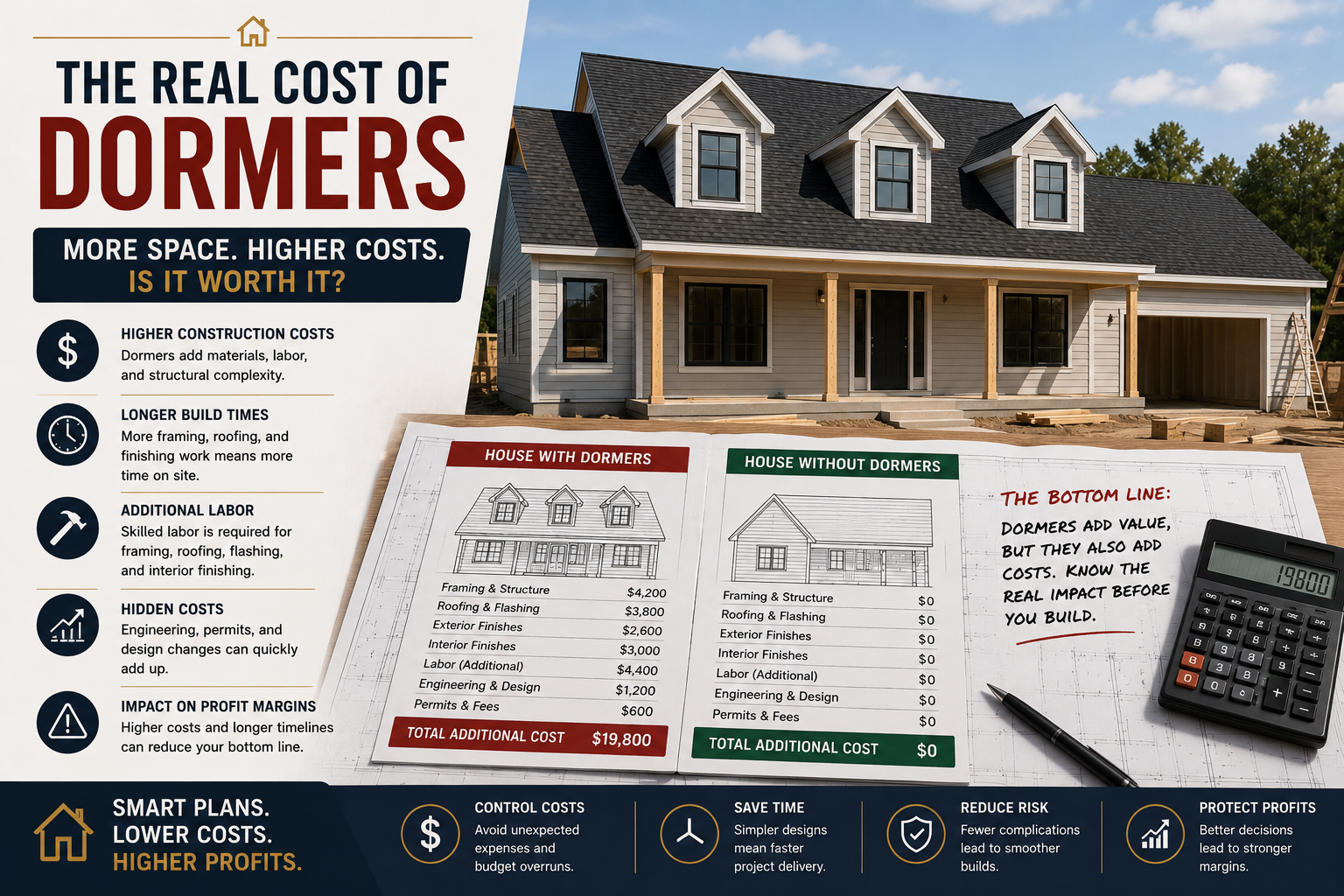
The Real Cost of Dormers
But what many builders, developers, and even homeowners don't fully realize is that dormers often come with costs that extend far beyond the initial design phase.
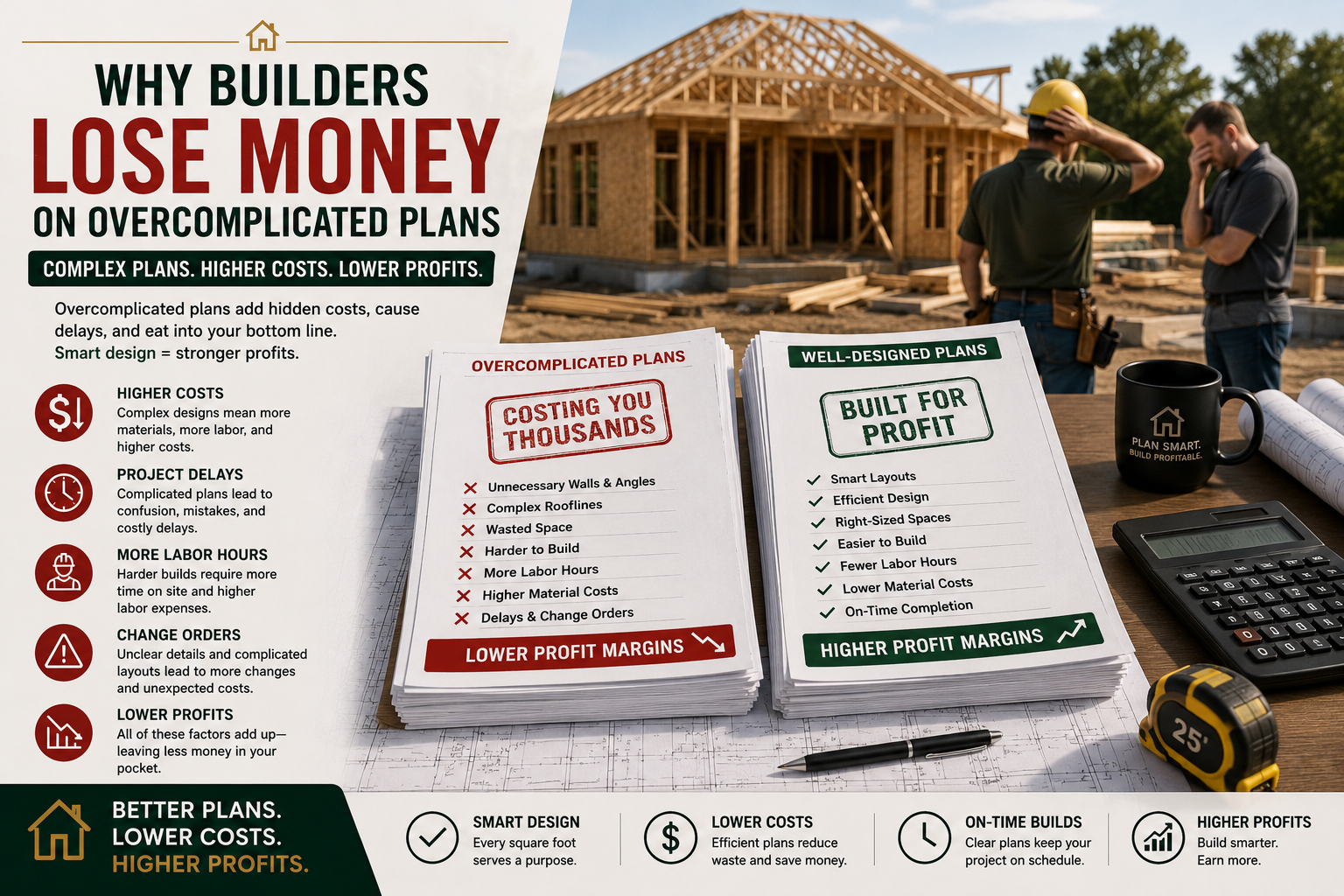
Why Builders Lose Money on Overcomplicated Plans
Every unnecessary design feature affects labor, materials, scheduling, and construction efficiency. While buyers may appreciate certain architectural details, builders often absorb hidden costs that quietly reduce profit margins.
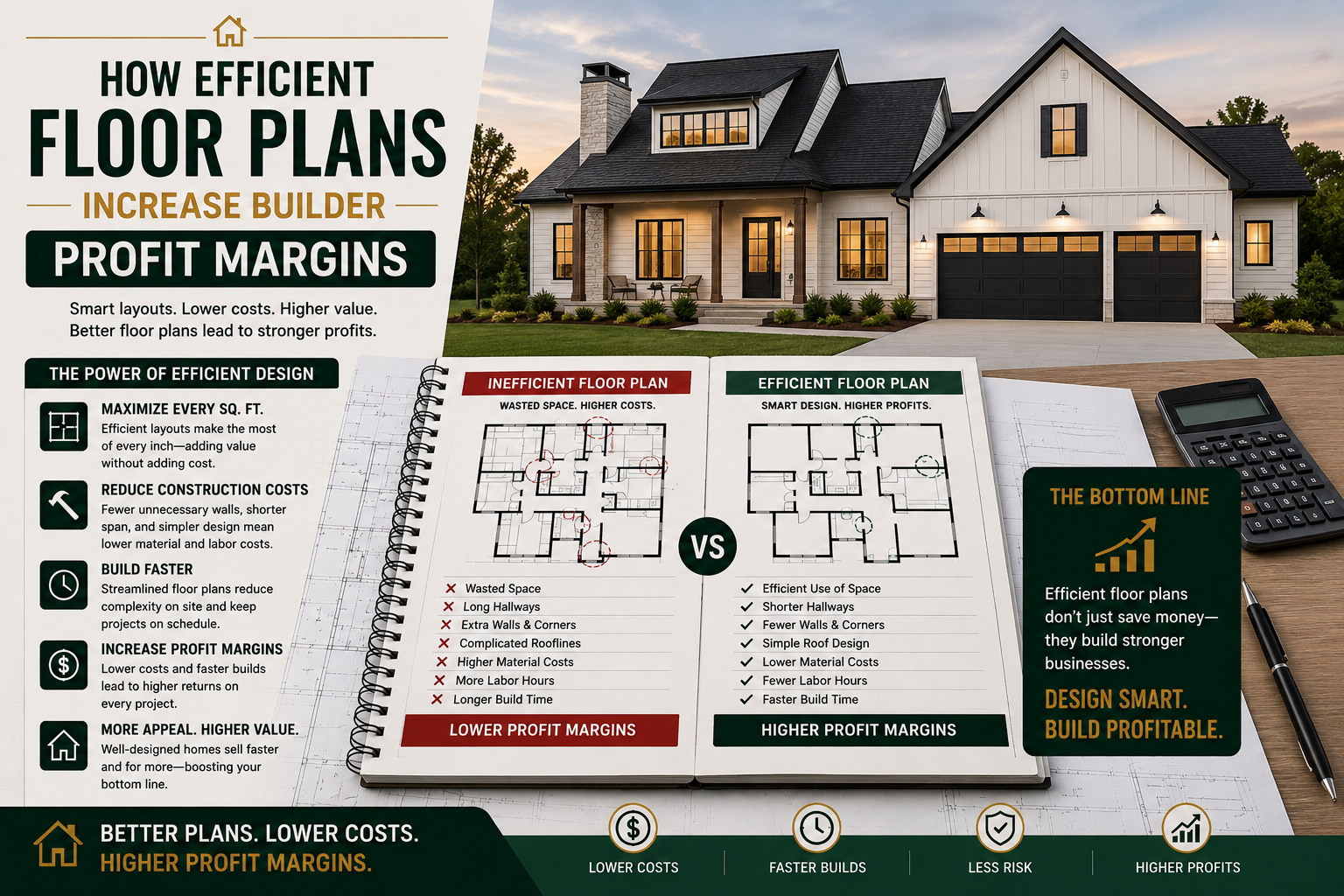
How Efficient Floor Plans Increase Builder Profit Margins
While all of those strategies matter, one of the most overlooked profit drivers is the floor plan itself.
An efficient floor plan can reduce construction costs, shorten build times, improve buyer appeal, and increase profitability across every stage of a project.
The best builders understand that profit isn't just created in the field—it's designed into the home from the beginning.
Here's how efficient floor plans help builders maximize profit margins and create more successful projects.
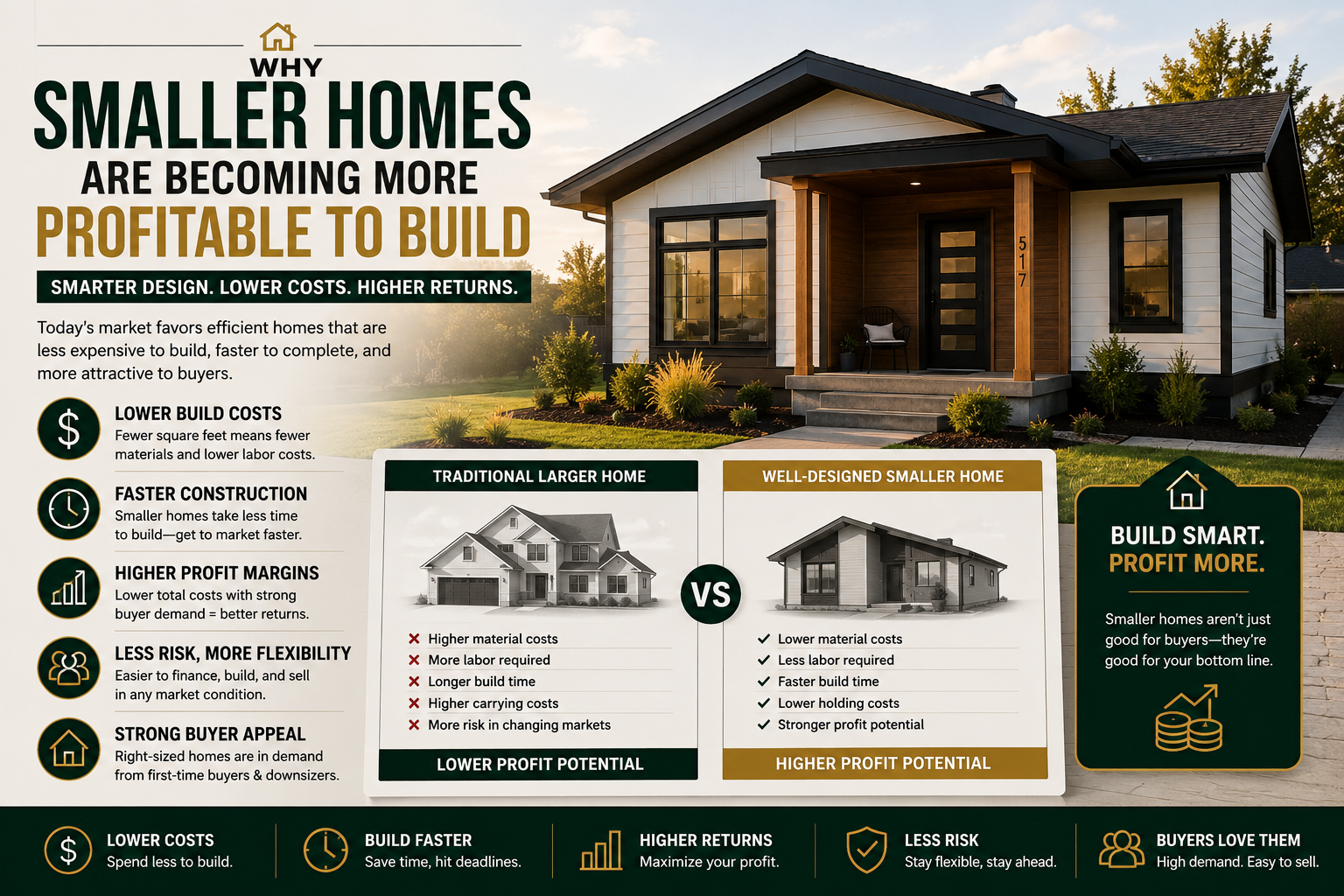
Why Smaller Homes Are Becoming More Profitable to Build
Across the country, builders, developers, and investors are discovering that smaller homes often generate stronger returns than larger homes. Rising construction costs, changing buyer preferences, higher interest rates, and land constraints are all contributing to a growing shift toward efficient, right-sized housing.
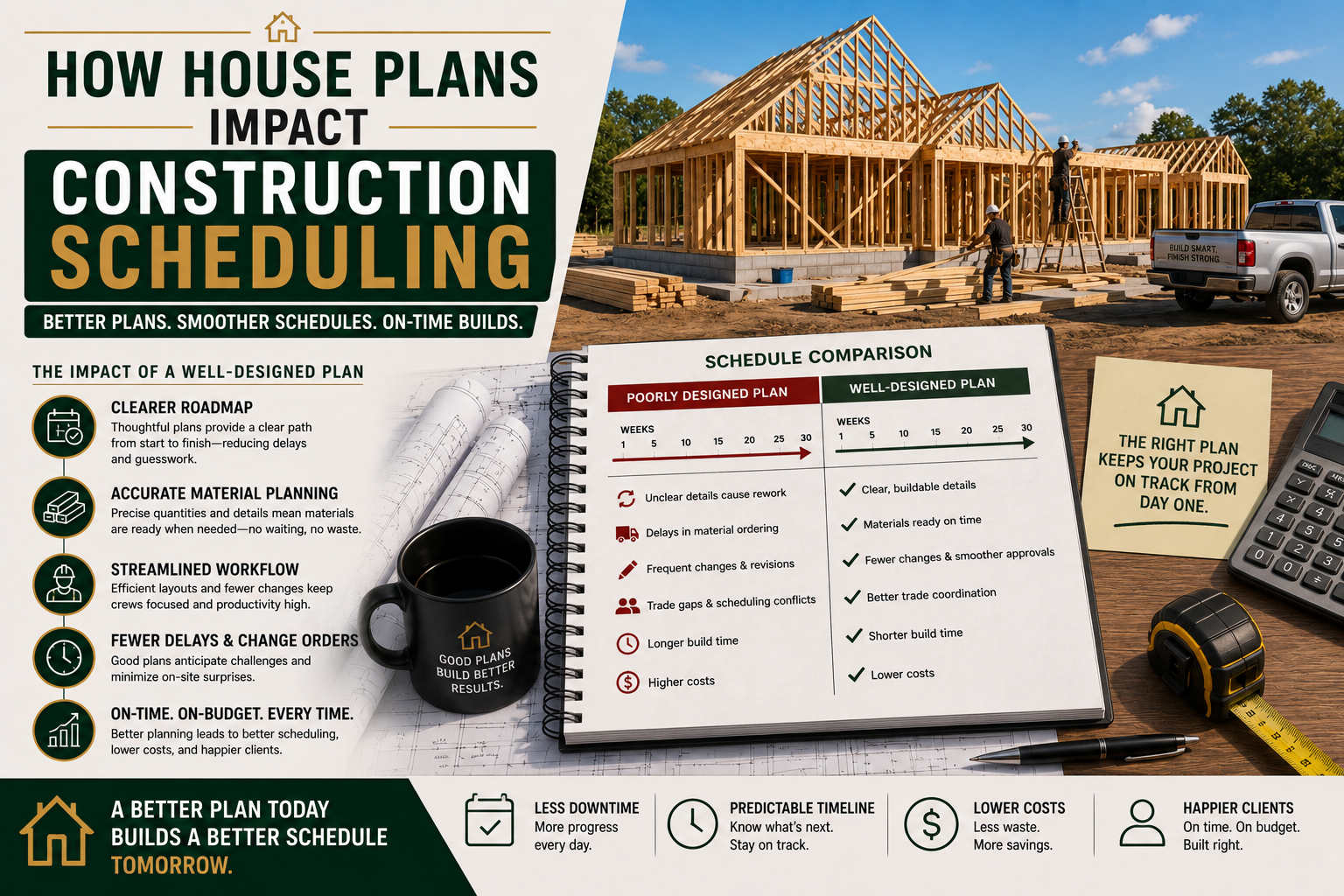
How House Plans Impact Construction Scheduling
Construction scheduling is one of the biggest factors affecting profitability in residential building.
Every delay impacts:
Labor efficiency
Trade coordination
Carrying costs
Closing timelines
Overall project momentum
And while many builders blame scheduling problems on labor shortages or subcontractor availability, one of the biggest causes often starts much earlier:
The house plan itself
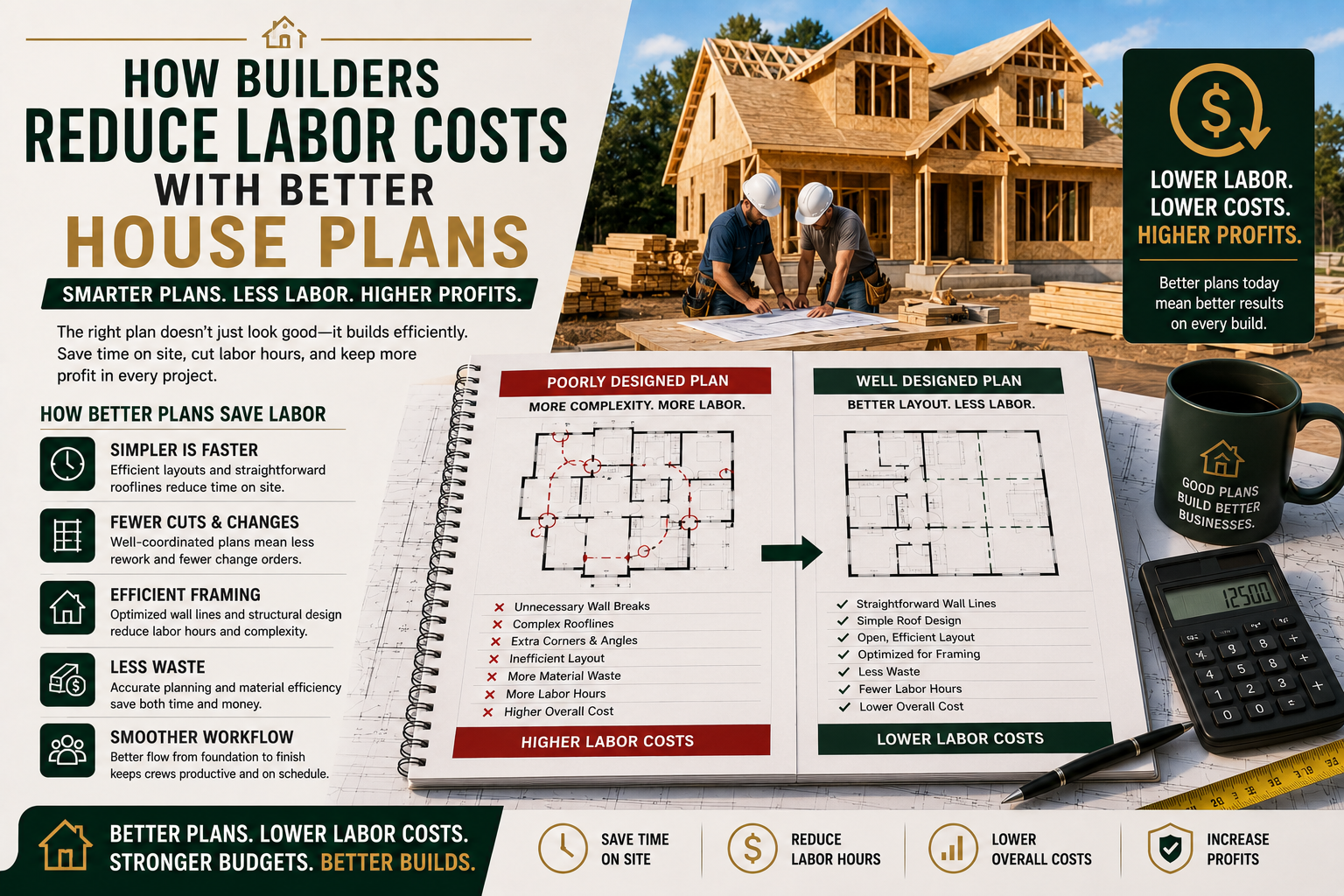
How Builders Reduce Labor Costs With Better House Plans
Labor costs are one of the biggest challenges builders face today.
Skilled labor shortages, rising wages, and longer build timelines have made efficiency more important than ever.
But many builders overlook one of the most effective ways to reduce labor costs:
The house plan itself.
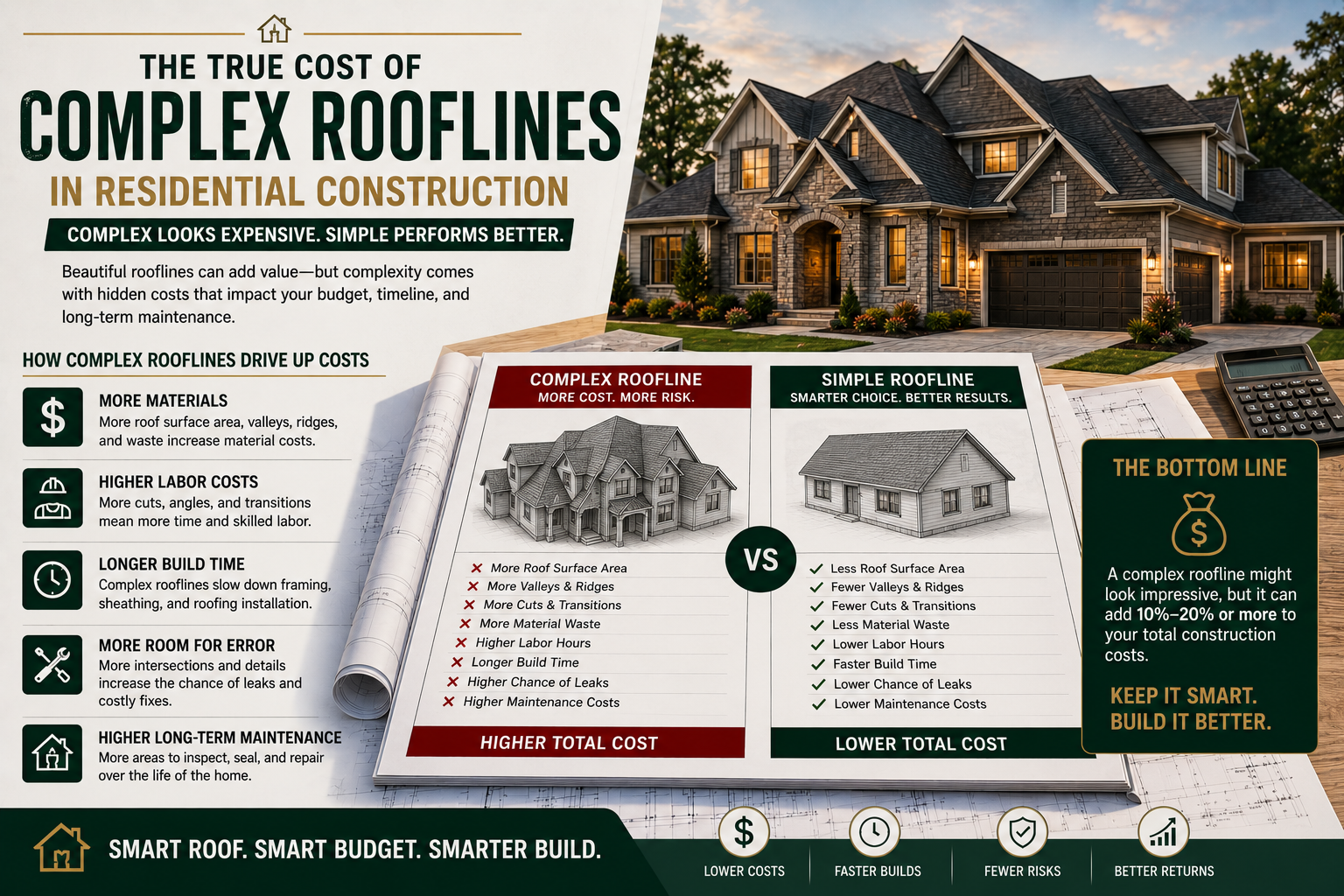
The True Cost of Complex Rooflines in Residential Construction
Complex rooflines may look impressive in renderings and marketing materials—but in residential construction, they often come with hidden costs that builders, developers, and homeowners eventually feel.
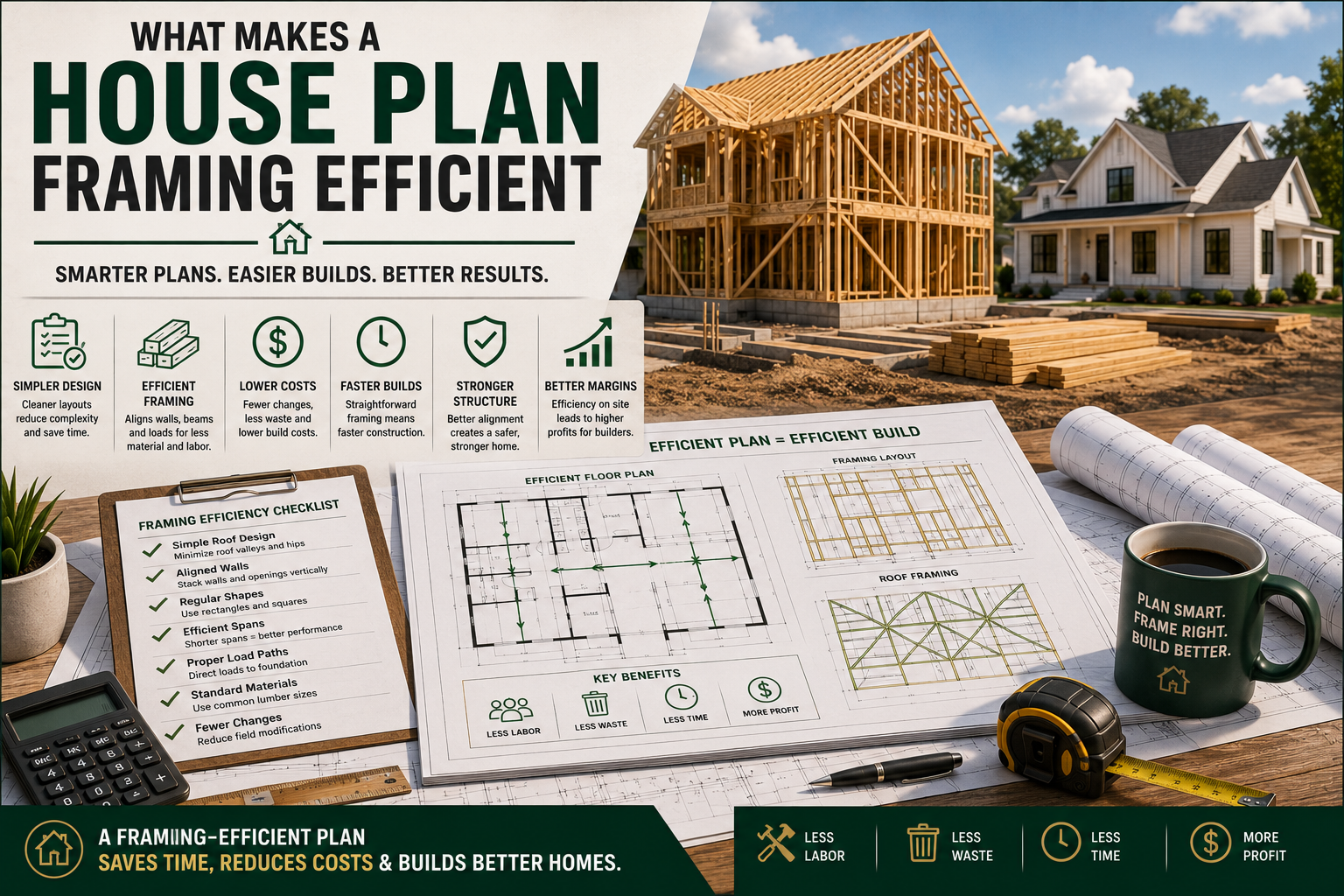
What Makes a House Plan Framing-Efficient?
In residential construction, framing efficiency matters more than most people realize.
A framing-efficient house plan can:
Reduce labor costs
Speed up construction timelines
Simplify scheduling
Improve overall profitability
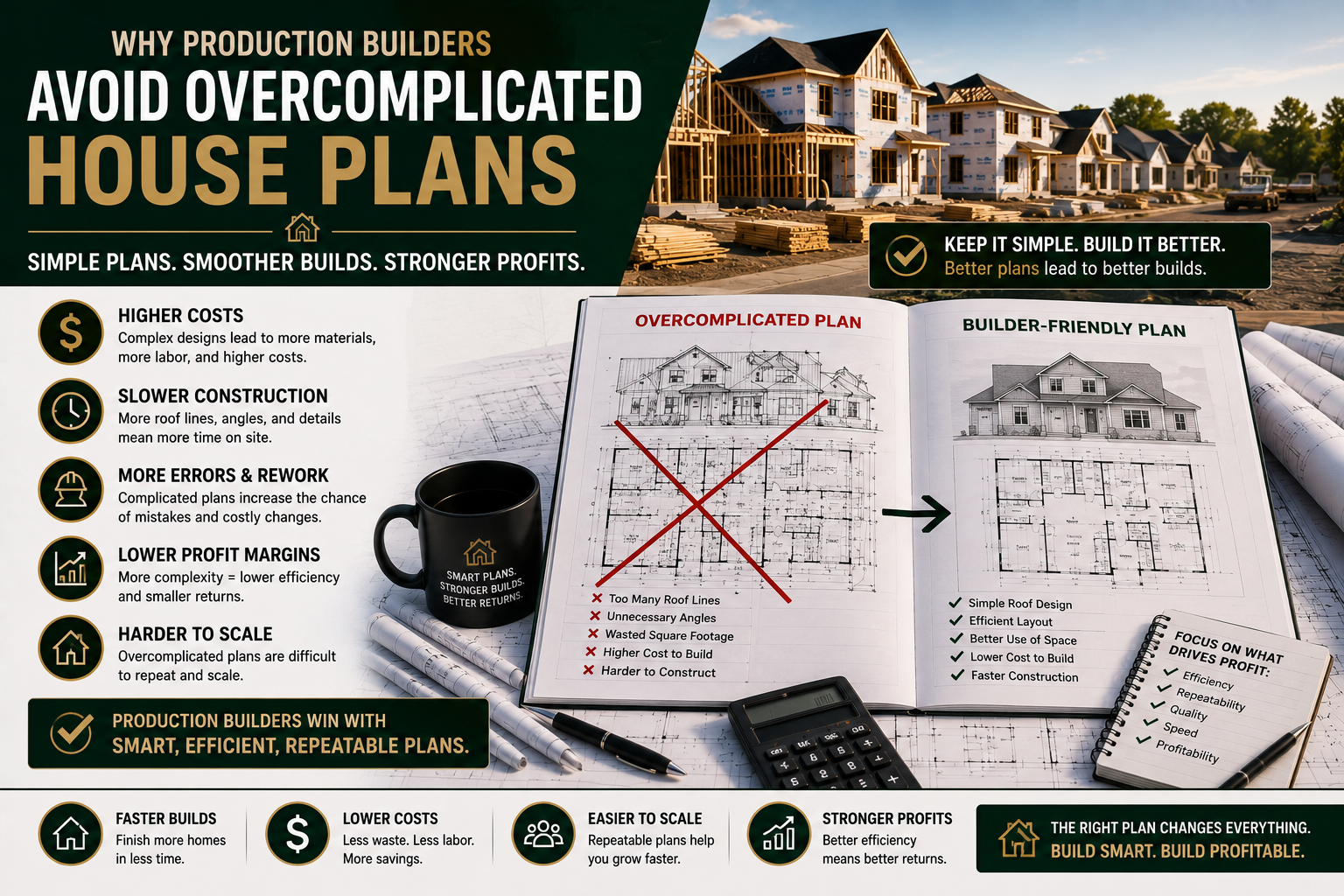
Why Production Builders Avoid Overcomplicated House Plans
Production builders understand something many people don’t:
Complexity is expensive.
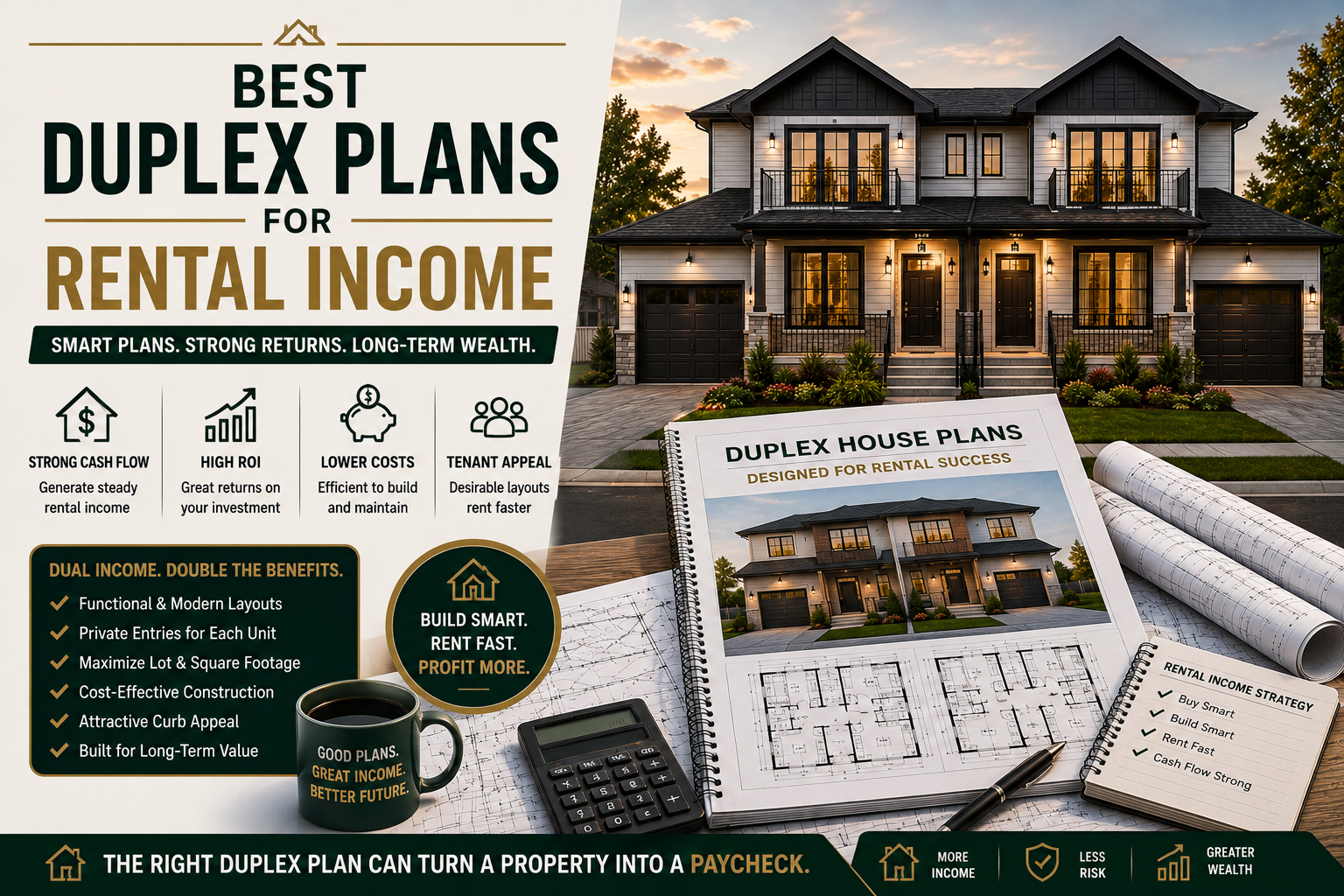
Best Duplex Plans for Rental Income
For real estate investors and developers, duplexes continue to be one of the smartest ways to maximize rental income and long-term ROI.
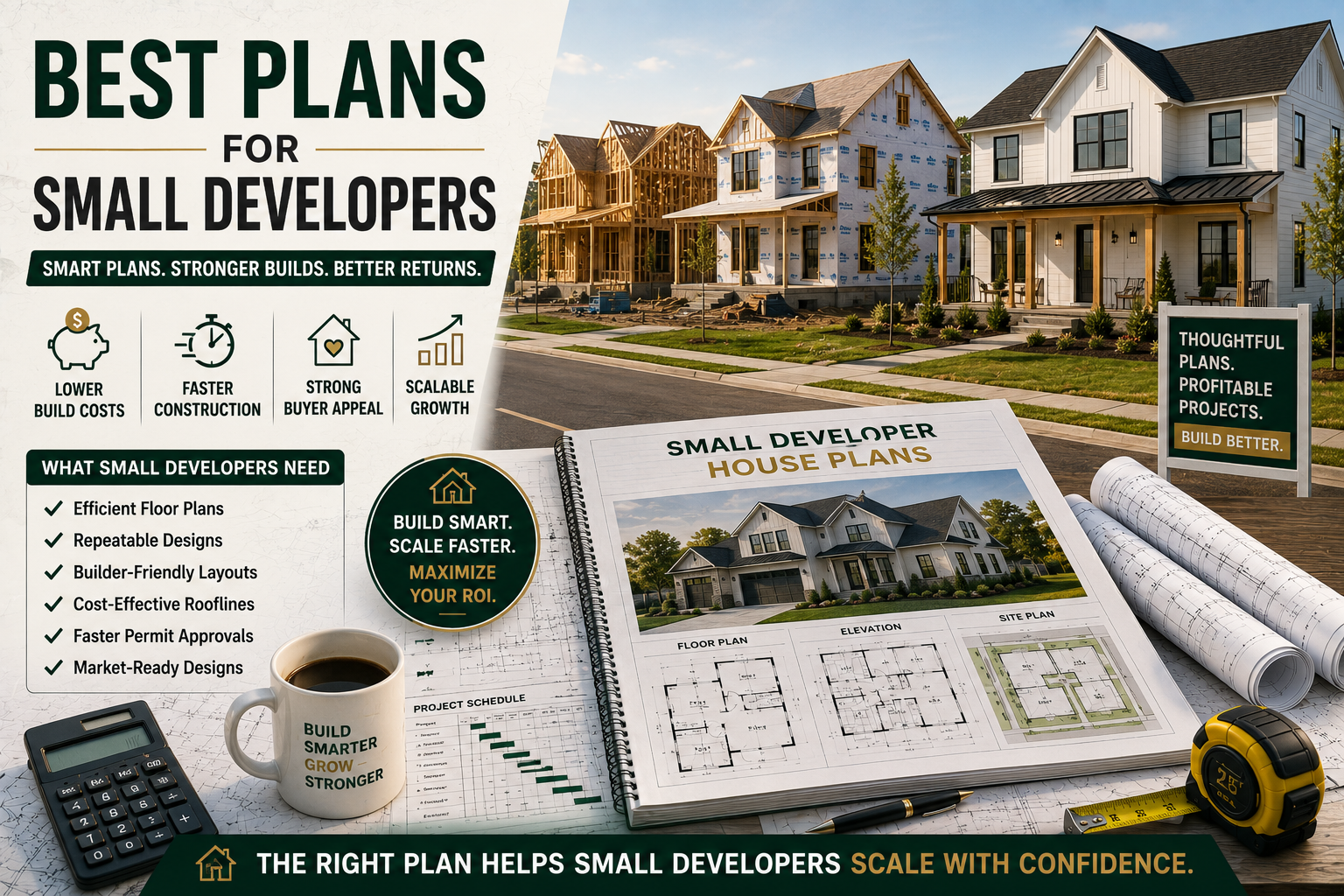
Best Plans for Small Developers
Small developers face a unique challenge.
You need to maximize:
Land value
Construction efficiency
Buyer demand
Return on investment
Without the massive budgets or infrastructure of large national builders.
That’s why choosing the right house plans matters so much.
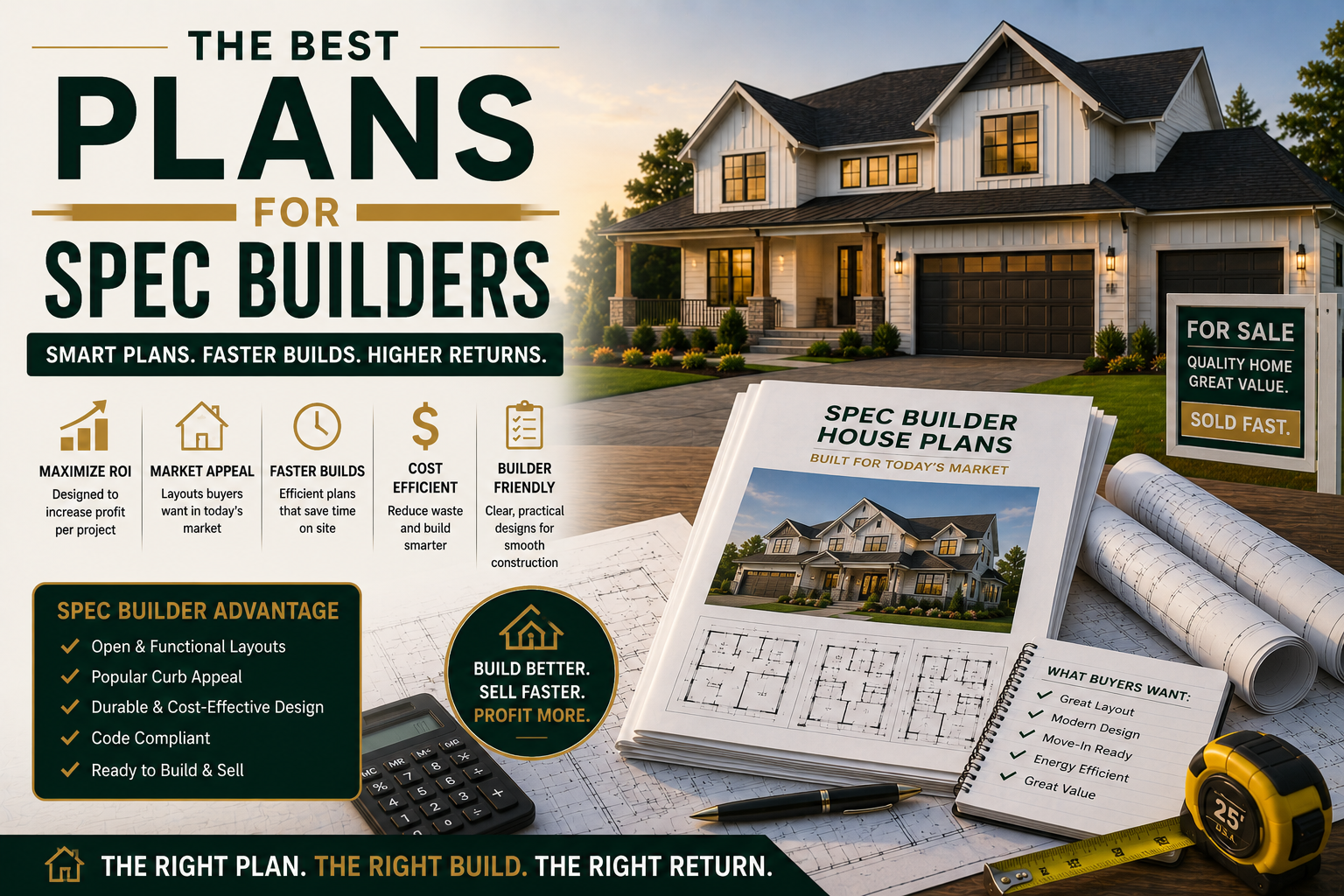
Best Plans for Spec Builders
Spec building is all about balancing speed, cost, and buyer demand.
The goal isn’t just to build a home.
It’s to build a home that:
Sells quickly
Builds efficiently
Maximizes profit
And that starts with choosing the right house plan.
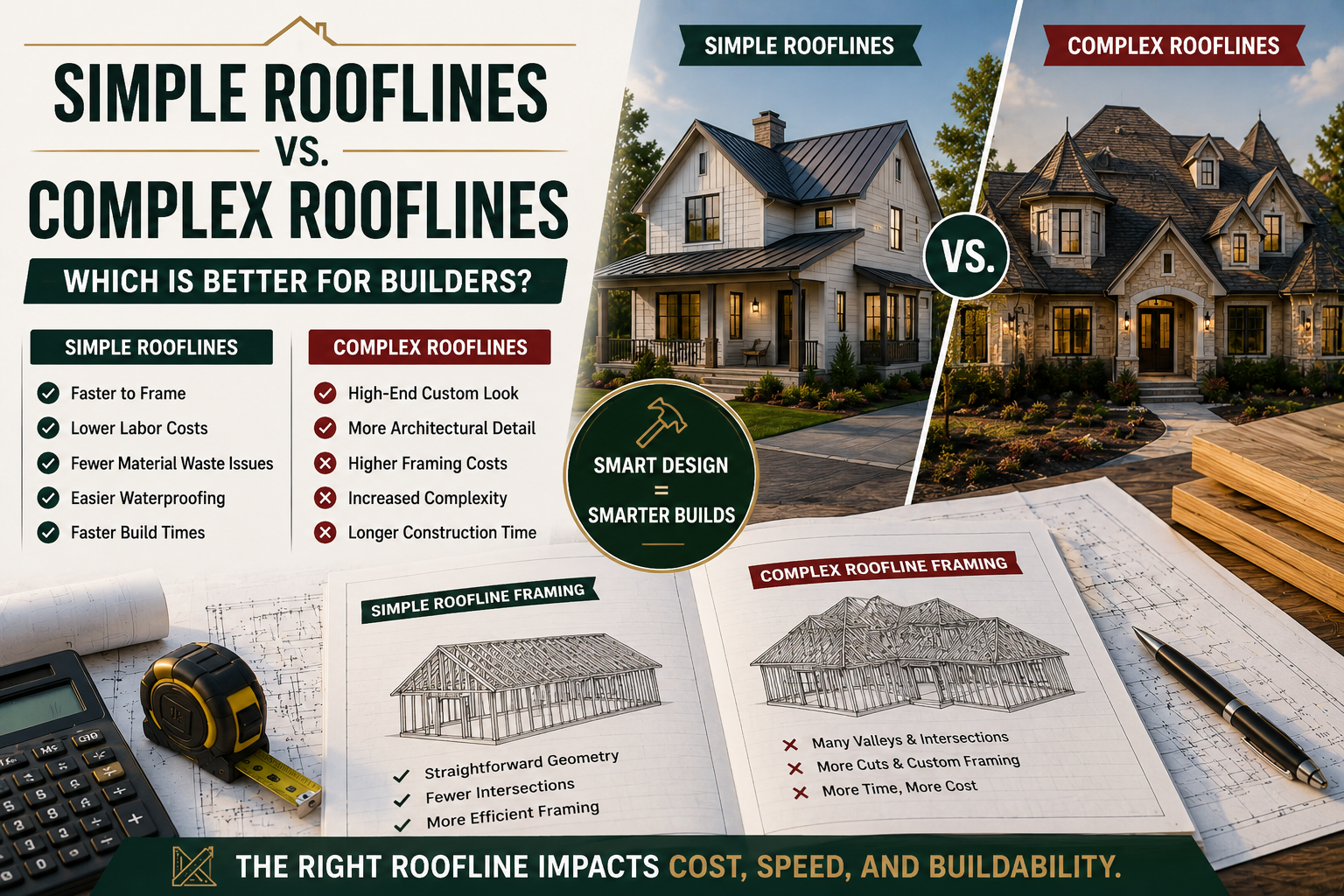
Simple Rooflines vs Complex Rooflines: Which Is Better for Builders?
while complex rooflines may look impressive in renderings, they often create costly challenges once construction begins.
For builders and developers focused on efficiency, timelines, and return on investment, simple rooflines usually outperform complex ones in the areas that matter most.
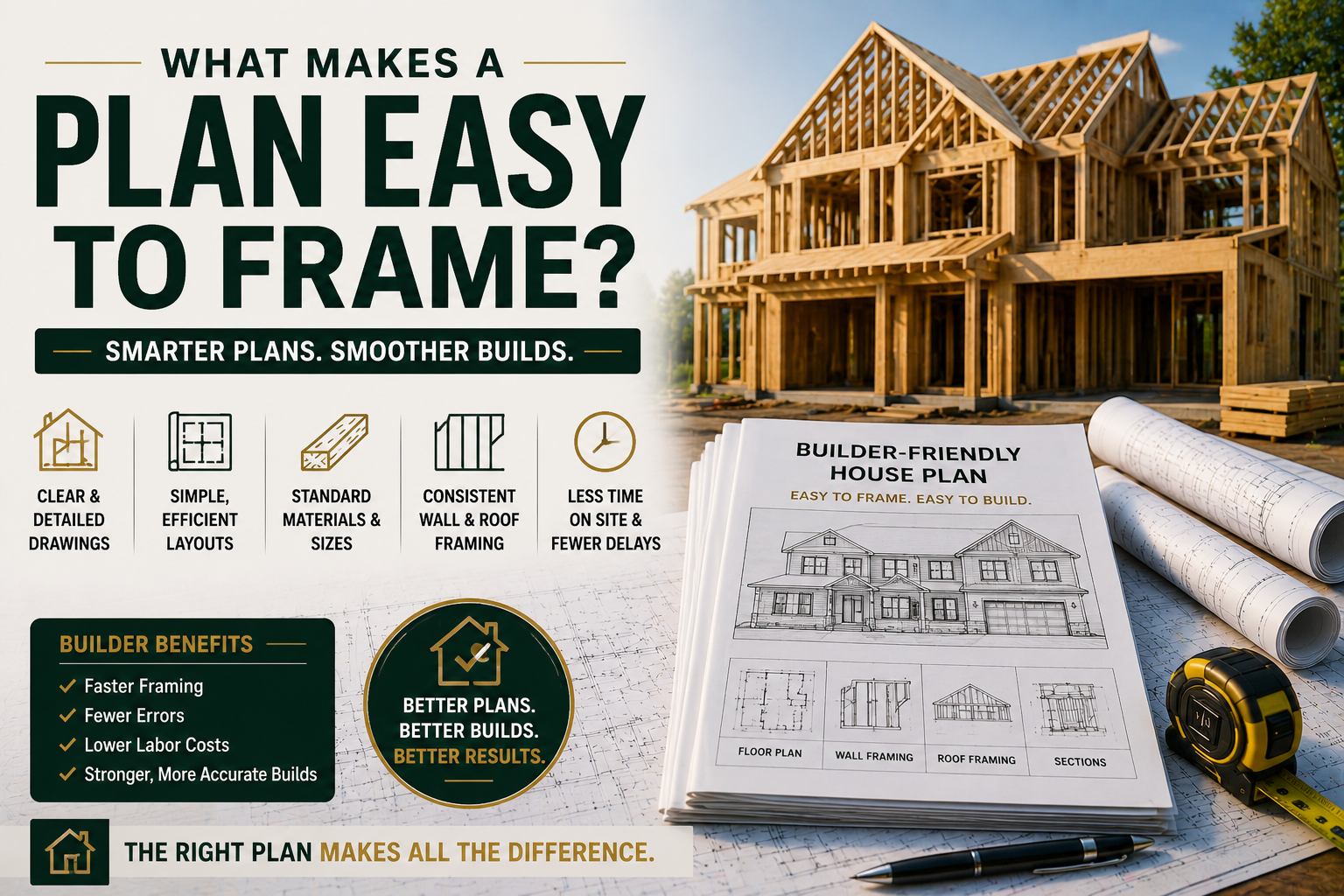
What Makes a Plan Easy to Frame?
In residential construction, framing is where momentum is built—or lost.
A house that frames quickly keeps the project moving, reduces labor costs, and creates efficiency for every trade that follows.

Best House Plans for Real Estate Investors
For real estate investors, the numbers matter.
Cash flow. ROI. Time to market. Exit strategy.
But one of the most overlooked factors that impacts all of them?
The house plan.
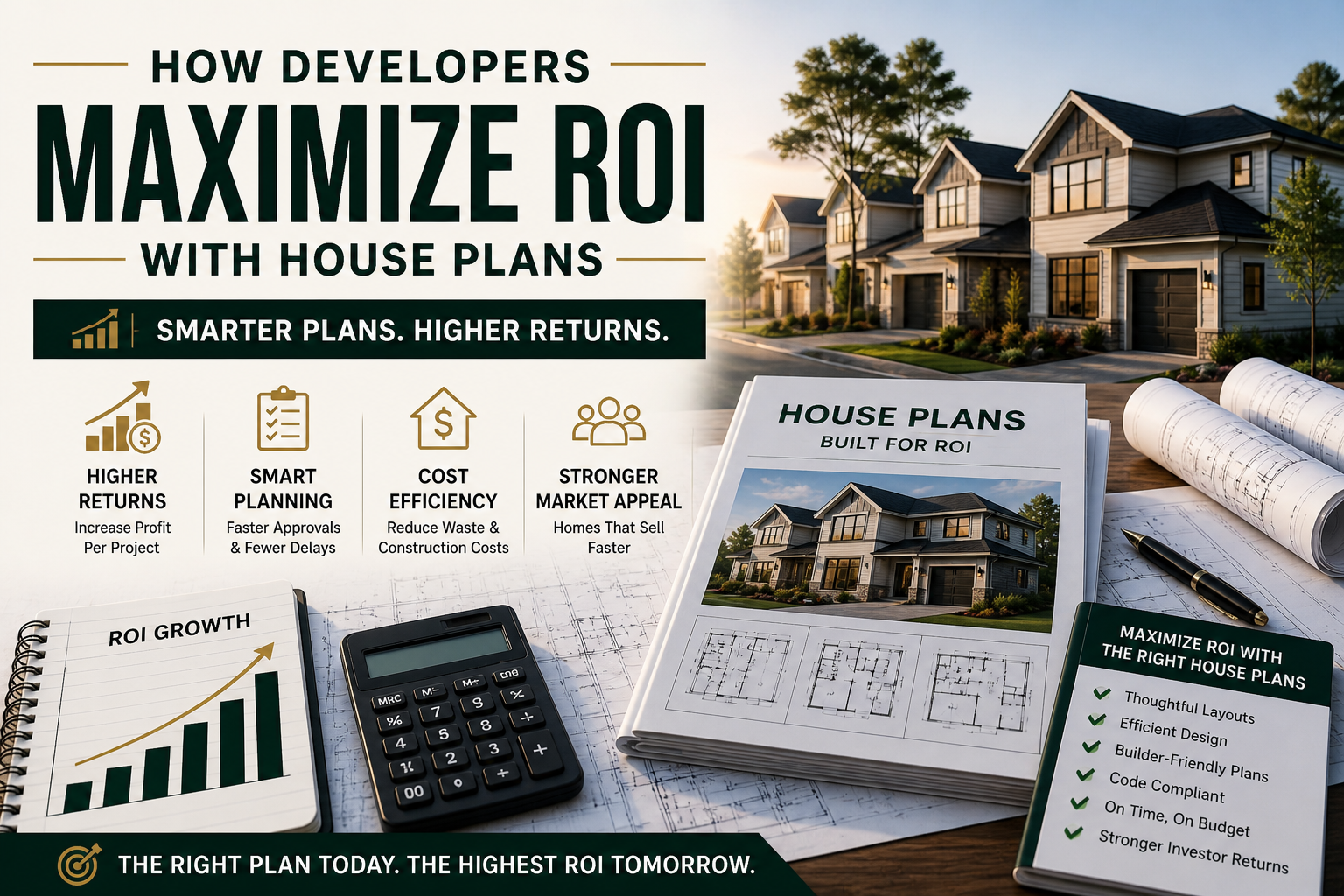
How Developers Maximize ROI with House Plans
In real estate development, return on investment isn’t just determined by location or market timing.
It’s built into the product itself.
And that product starts with one critical decision:
The house plans you choose.
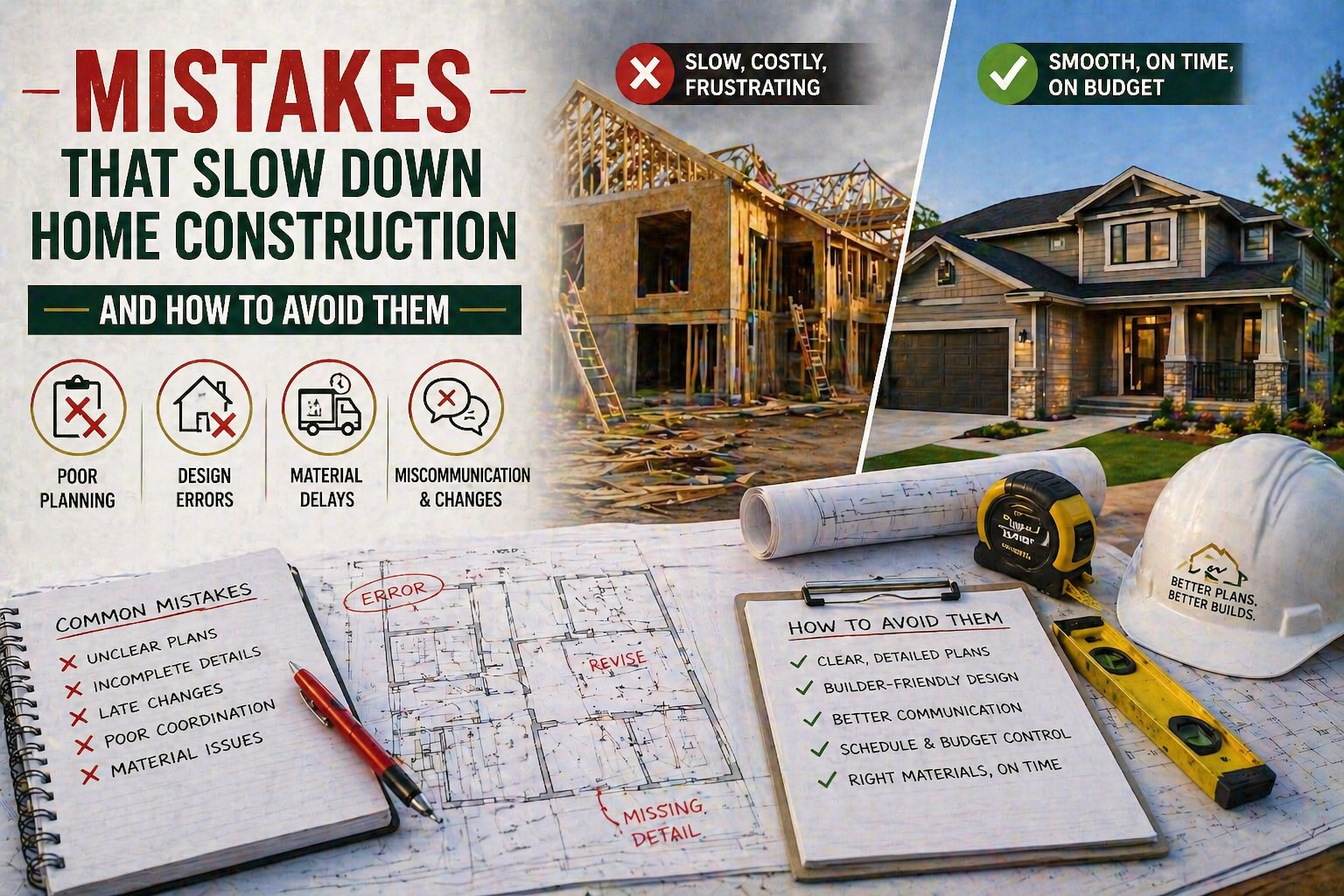
Mistakes That Slow Down Home Construction (And How to Avoid Them)
In home building, time isn’t just money—it’s momentum.
Every delay:
Pushes back your next project
Increases carrying costs
Disrupts your crew schedule
Eats into your profit
And most delays?
They’re preventable.
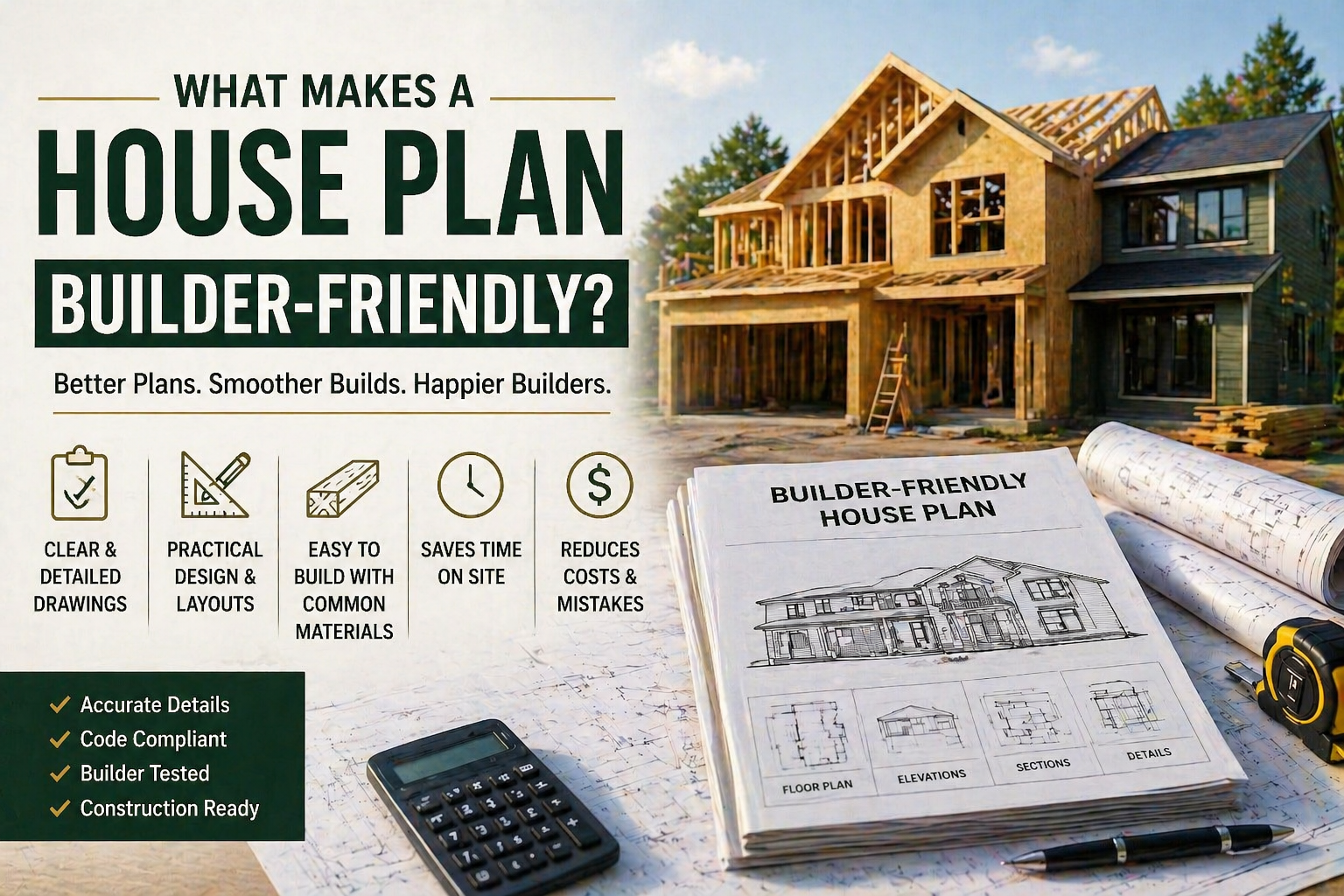
What Makes a House Plan Builder-Friendly?
A builder-friendly house plan is one that reduces friction at every stage of construction, from framing to finish. It saves time, lowers costs, and makes your entire operation more efficient.
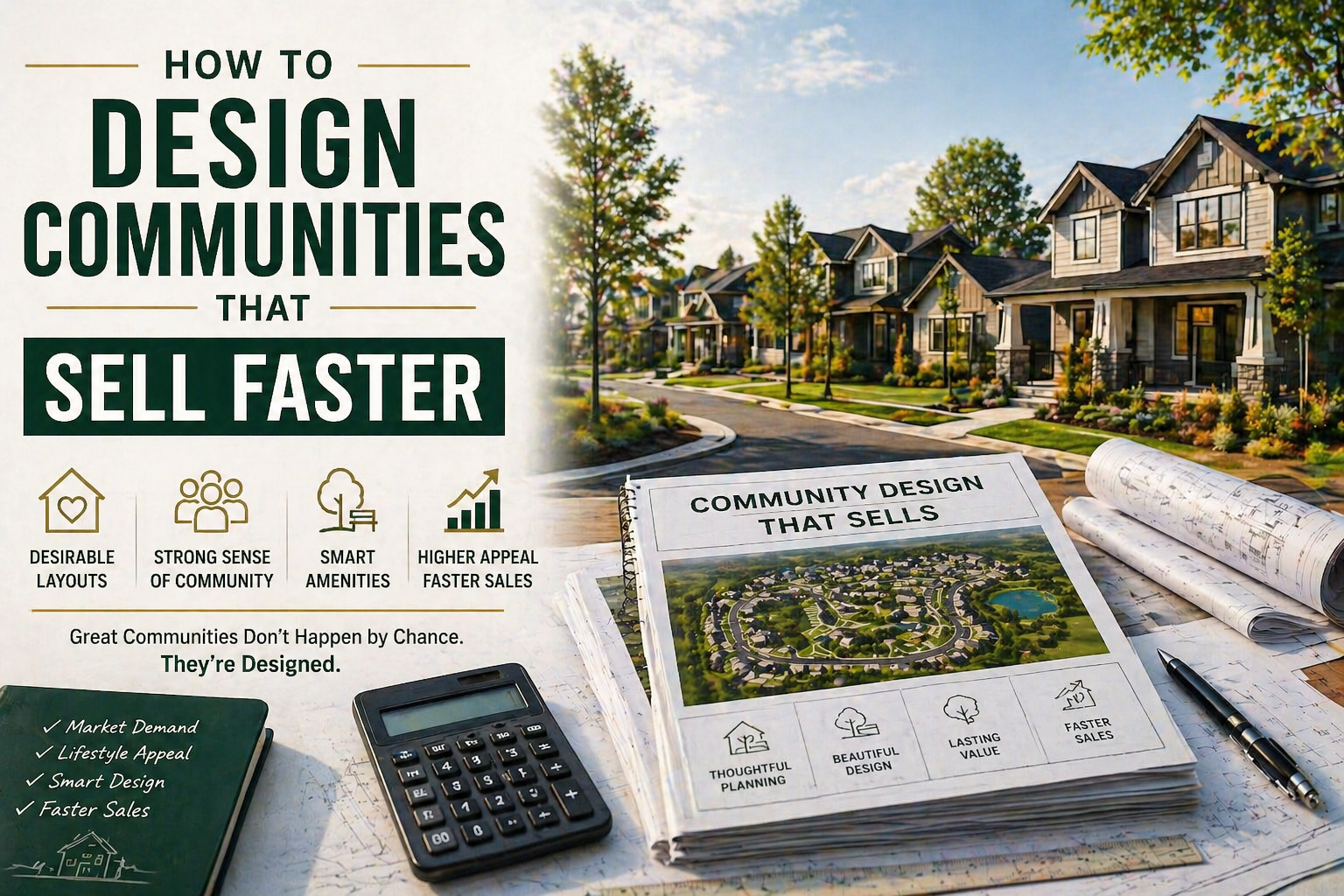
How to Design Communities That Sell Faster
The most successful developers don’t just build homes—they design communities that are easy to understand, easy to market, and easy to buy into.
Here’s how to do it.

How Developers Maximize ROI with the Right House Plans
Get the plans right, and your margins expand.
Get them wrong, and every phase of the project becomes harder—and less profitable.
Here’s how smart developers maximize ROI by choosing the right house plans.